For many hunters in Monster Hunter Wilds, the journey rarely begins with a single grand battle. More often, it starts with a quiet realization: a particular piece of gear is just one crafting material away. Such was the case for a hunter named Rook, who had spent an entire evening staring at an Insect Glaive upgrade, only to discover that every recipe demanded the same elusive resource—Wingdrake Hide. It seemed simple enough, yet as Rook would soon learn, even the most common-sounding material could become a recurring errand.
Wingdrake Hide is one of those crafting components that quietly underpins a surprising amount of equipment. Talismans, Insect Glaives, and a handful of other useful gear all lean on this deceptively modest drop. That importance means hunters often find themselves returning to the same small monsters again and again. But where exactly should one go? And why does a plus sign suddenly appear next to the name? Those questions haunted Rook until a few reliable habits fell into place.
The Low Rank Source: Baunos and Harpios
The answer to Rook's first question lay in two small monsters: Baunos and Harpios. Both belong to the small monster category, which means a solo hunter can handle them without rounding up a full party. They are not difficult to defeat, but they do have a habit of staying airborne, which can make them feel more evasive than they really are.
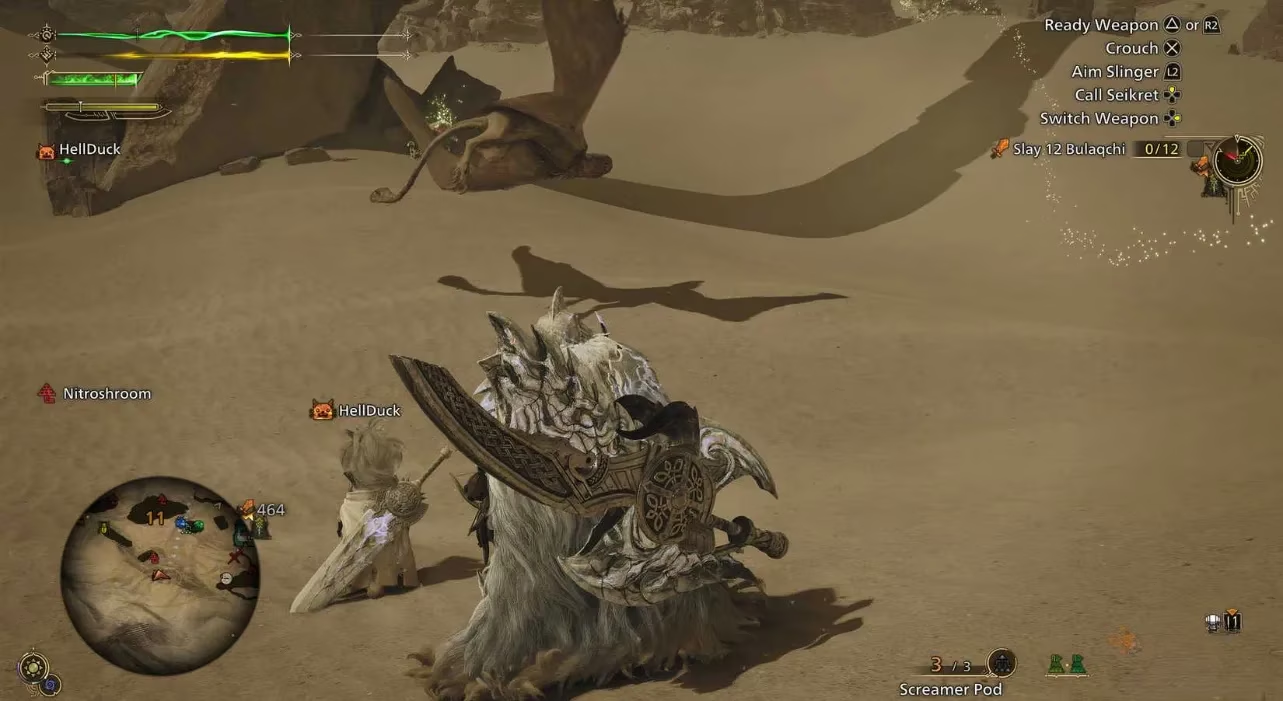
Baunos are most commonly spotted in Areas 16 and 17 of the Plains region. Harpios, by contrast, favor the Forest and the Oilwell Basin. In the Forest, their appearances seem scattered, with no single fixed spawn point that hunters can rely on. However, in the Oilwell Basin, which becomes available during Chapter 2, Harpios tend to circle the second level, especially around Areas 8 and 10. Once a hunter knows these spots, the farming loop becomes far less frustrating.
How does one actually bring these winged creatures down? The trick is not to swing wildly. Instead, a hunter should aim at a flying Baunos or Harpios until a prompt appears. That prompt allows the hunter to yank the creature to the ground with the slinger. After that, a few solid hits are usually enough to finish the job. Once the small monster falls, the hunter can carve it for Wingdrake Hide. Rook discovered that the entire process took less than a minute once the technique clicked—and that realization turned a tedious search into a quick routine.
But a new problem soon emerged.
High Rank and the Elusive Wingdrake Hide+
As Rook pushed deeper into the game, the base version of Wingdrake Hide stopped appearing. Instead, the same Baunos and Harpios began dropping a higher-tier material labeled Wingdrake Hide+. This is a common source of confusion, because the two versions are not interchangeable. The base tier of Wingdrake Hide only drops in Low Rank, while the upgraded variant appears exclusively in High Rank.
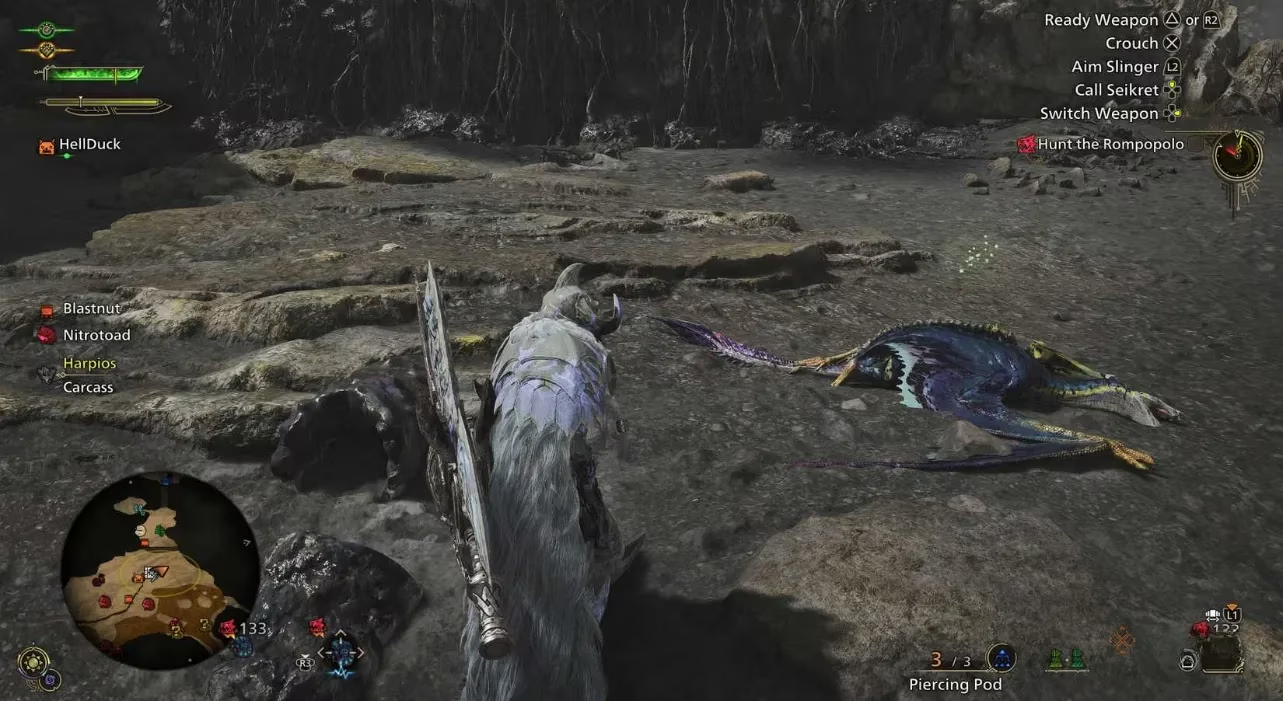
For hunters who need Wingdrake Hide+ specifically, the solution is straightforward: continue hunting Baunos or Harpios in the same regions—Forest, Oilwell Basin, or Plains—but this time while in High Rank. The monsters themselves do not change, but the reward table does. It feels almost too simple, and yet many hunters, including Rook, initially assumed they needed to search for a completely different creature. Was that not the first assumption? The truth was far less exciting.
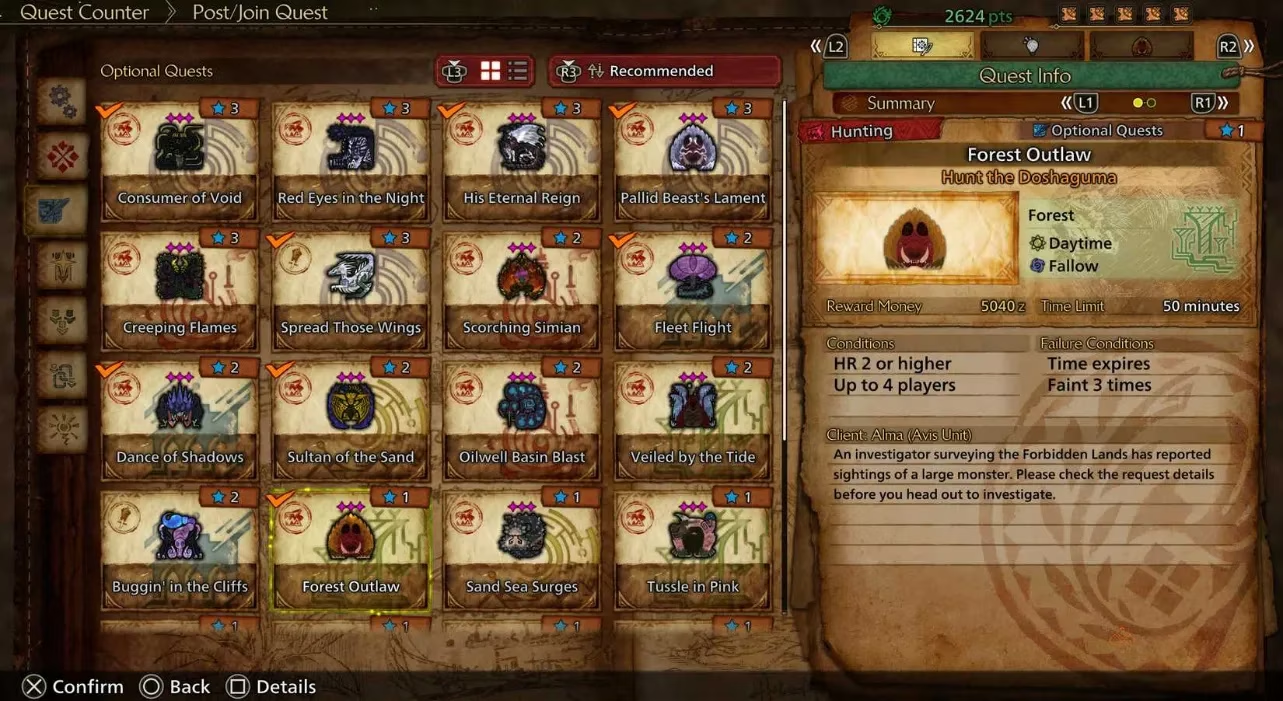
Then came the reverse problem. What if a hunter finds themselves in High Rank but suddenly needs the base version of Wingdrake Hide? Perhaps a low-level armor set or an early talisman still requires the unmodified material. In that case, there is no need to abandon all progress. A hunter can simply visit Alma's Quest Counter and select a monster from the Optional Quest tab. The key is to pick a quest rated 3 Stars or lower, which forces the hunt back into Low Rank conditions. But there is a catch: the selected monster must roam one of the areas where Baunos or Harpios appear.
For example, selecting a one-star Doshaguma quest will place the hunter in the Forest. Once the quest begins, the hunter can ignore the main objective for a while and search for a Harpios instead. Since the quest is still Low Rank, the Harpios will drop the base Wingdrake Hide rather than the plus version. Rook found this workaround especially useful when crafting older gear late into the campaign. It saved hours of unnecessary grinding.
A Quick Reference for Hunters
To keep the details straight, Rook eventually wrote them down. A simple table helped avoid the familiar headache of returning with the wrong material.
| Material | Monster | Rank | Region | Notes |
|---|---|---|---|---|
| Wingdrake Hide | Baunos | Low Rank | Plains, Areas 16–17 | Use slinger prompt to pull down |
| Wingdrake Hide | Harpios | Low Rank | Forest, Oilwell Basin (Areas 8 & 10) | No fixed Forest spawn |
| Wingdrake Hide+ | Baunos or Harpios | High Rank | Same regions | Drops instead of base version |
| Wingdrake Hide (when in High Rank) | Harpios or Baunos | Low Rank via Optional Quest 3★ or lower | Forest, Plains, Oilwell Basin | Ignore main target to hunt small monsters |
That last row was the one Rook had to consult most often. After all, who among us has not returned to the Smithy only to realize the crafted item required a material with a tiny plus sign attached?
The Final Check
Before heading out, a hunter should always double-check the crafting recipe. Wingdrake Hide and Wingdrake Hide+ create different items, and mistaking one for the other can lead to wasted trips. The difference is easy to spot if the hunter knows to look for the plus sign on the label. It may seem like a small detail, but in the heat of a crafting session, that tiny symbol can be the difference between a successful upgrade and another frustrating search through the wilds.
For Rook, the Wingdrake Hide grind eventually became second nature. What began as confusion over flying creatures and missing materials turned into a reliable loop of quick kills and careful planning. And isn't that the essence of Monster Hunter Wilds? The game rewards preparation as much as skill. Sometimes the smallest monsters teach the biggest lessons.