As we look back on 2026, the saga of Monster Hunter Wilds on PC continues to be a cautionary tale of ambition meeting technical reality. Despite the passage of time and numerous patches, the core performance issues that plagued the game at its 2025 launch remain a thorn in the side of the community, leading many to believe a smooth experience was never truly on the menu.
The Capcom Showcase event back in June 2025 was a pivotal moment of disappointment. While the studio proudly unveiled a roadmap brimming with new events, DLCs, and additional content for Monster Hunter Wilds, there was a glaring omission: any significant commitment to fixing the game's crippling PC performance. This focus on expansion over stabilization felt to many like trying to add a fifth wheel to a wagon that was already missing two—it missed the fundamental problem entirely. The subsequent patch notes promising over 100 bug fixes did little to quell the outrage. For the dedicated PC hunters, it felt like receiving a beautifully wrapped box, only to find it empty inside.
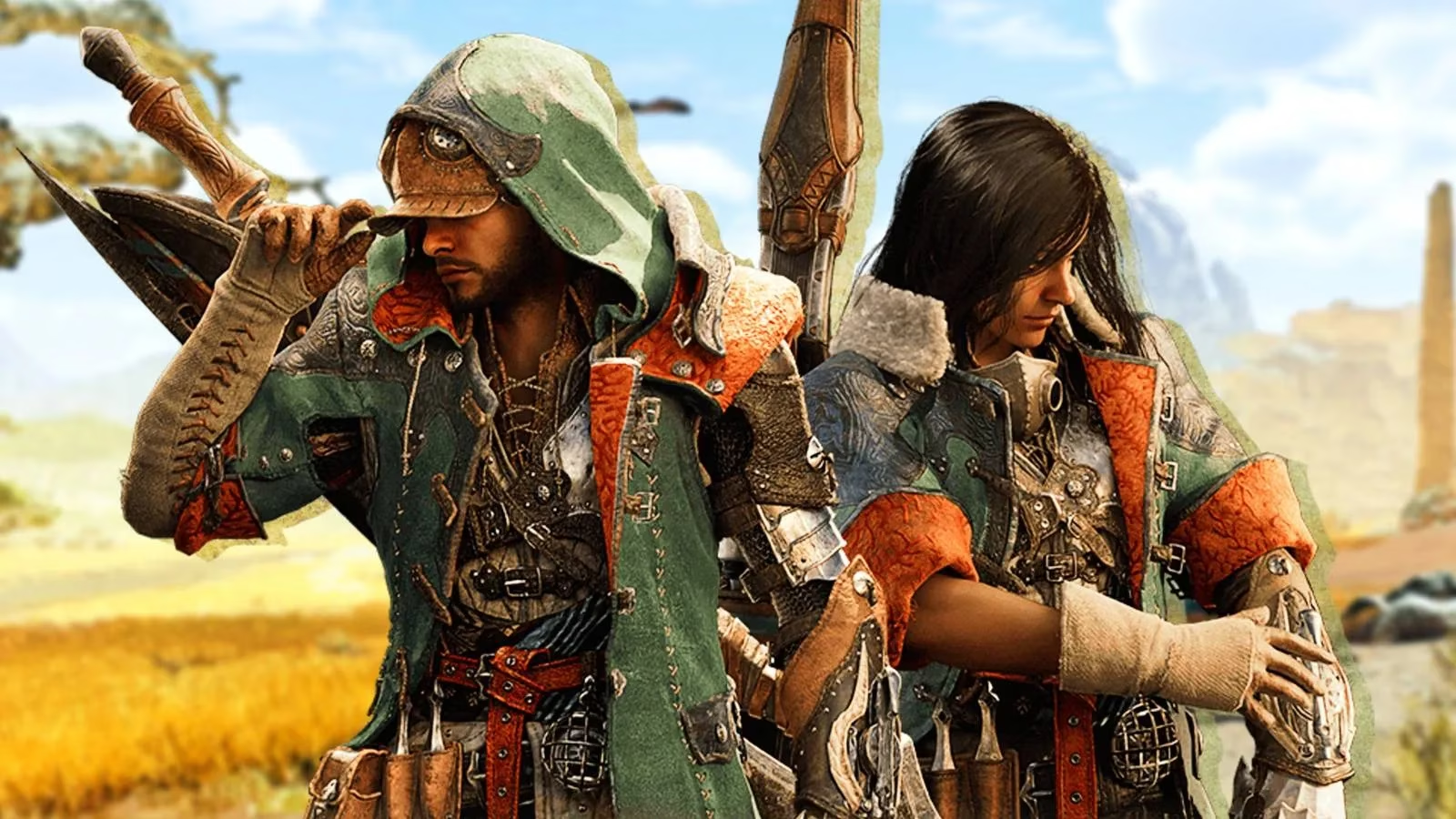
The fan frustration erupted online, becoming a chorus of discontent. On platforms like Reddit, the sentiment shifted from hopeful anticipation to resigned cynicism. User Amedas voiced the collective pain with a simple, desperate question: "So? Will I be able to play without crashing every 5 min?" The response from Relevant_Mail_1292 was a masterclass in gamer sarcasm: "No but at least your Palico can do an air-guitar." This exchange perfectly captured the feeling that Capcom was prioritizing cosmetic fluff over foundational fixes.
🔍 The Core of the Crisis: Speculation and Silence
What makes the situation more alarming for players is Capcom's perceived silence on the root cause. The community's outcry has been deafening, making corporate unawareness an implausible excuse. This led to darker theories taking root. Redditor BigBurly46 proposed a sobering hypothesis: "They haven't fixed the game yet because they CAN'T fix it."
This theory suggests a fundamental engine mismatch. The RE Engine, which powered the critically acclaimed and technically solid Resident Evil remakes, might be like a precision sports car engine being asked to power a massive freight train—it was simply not designed for the scale and persistent open-world demands of Monster Hunter Wilds. If the architectural foundation is flawed, no amount of patchwork can build a stable house. As user drockalexander logically concluded, "if they could they would have all hands on deck to fix." The continued absence of a major performance overhaul suggests an insurmountable technical hurdle.
📉 The Stark Contrast: Critical Praise vs. Player Panning
The irony of Monster Hunter Wilds' situation is palpable. On one hand, the game's core design was lauded:
-
🏞️ Expansive Open World: Critics praised its vast, living ecosystems.
-
⚔️ Classic Mechanics, Upgraded: The monster hunting loop was refined and expanded.
-
🗺️ Heaps of Post-Game Content: There was no shortage of things to do... theoretically.
On the other hand, the player experience on PC has been a different beast entirely. The Steam review page tells the real story, having dipped into "Overwhelmingly Negative" territory. The issues reported are a catalog of PC gaming nightmares:
| Symptom | Player Experience |
|---|---|
| Severe Stuttering | Gameplay feels like watching a slideshow during intense fights. |
| Drastic FPS Drops | Silky smooth one second, a choppy mess the next. |
| Blurred/Unstable Graphics | Visual clarity is sacrificed, making tracking monsters difficult. |
| Random Crashes | The ultimate immersion-breaker, losing progress to instability. |
For many, the game oscillates between "frustrating to play at best and impossible to even boot up at worst." It's a classic case of a masterpiece trapped behind a broken pane of glass—you can see its brilliance, but you can't properly touch or experience it.
⏳ The Lingering Legacy into 2026
As we stand in 2026, the situation for Monster Hunter Wilds on PC remains largely unresolved. Capcom has continued to apply tweaks and band-aid fixes, much like trying to stop a dam leak with chewing gum. The new content keeps coming, but for a significant portion of the PC player base, it's content they can't reliably enjoy. The initial launch window failure to address performance has cast a long shadow, eroding trust and leaving a dedicated segment of the community feeling abandoned.
The tale of Monster Hunter Wilds serves as a stark reminder that in the modern gaming landscape, a game's ambition must be matched by its technical execution. A vast, beautiful world and deep mechanics mean little if the frame rate stutters like a dying engine and crashes are more common than successful hunts. For now, the hope for a miraculous, performance-transforming patch has faded for most, leaving behind a community that admires the game's potential from afar, forever wondering what could have been if it only ran as good as it looked.