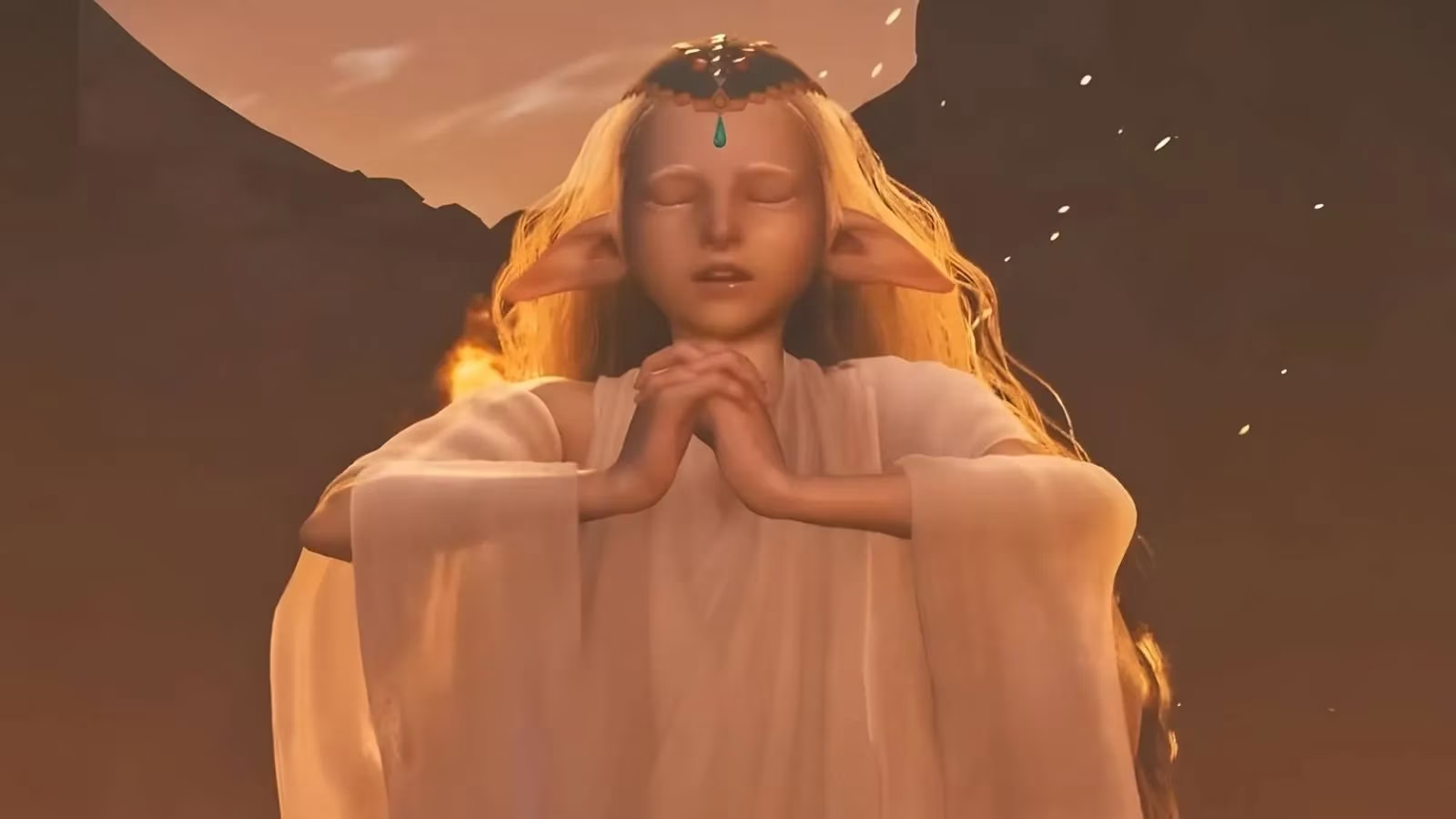
In the year 2026, as Monster Hunter Wilds continues to captivate players with its expansive ecosystems and thunderous hunts, one figure stands apart from the chaos of battle—the Diva. Her presence in the Grand Hub is not merely an aesthetic addition but a narrative pillar that connects the latest installment to the franchise's deep-rooted history of blending myth, music, and community. Across multiple entries, Capcom has woven the concept of a mystical singer into the fabric of its world, transforming these characters from background flavor into emotional anchors. Monster Hunter Wilds elevates this tradition, positioning the Diva as a central symbol of perseverance and shared experience in a game otherwise defined by its colossal beasts and perilous environments.
🎵 The Historical Roots: From Frontier's Tragedy to Dundorma's Songstress
The Diva's lineage traces back to earlier titles, where her predecessors served as guardians of lore and emotion. In Monster Hunter Frontier, a young girl, adopted by Felynes after her village was destroyed by the Elder Dragon Inagami, became one of the first incarnations. Her story is a tapestry of harmony and hubris:
-
The Village's Fall: Her people lived symbiotically with Inagami, which controlled bamboo growth to sustain them.
-
The Downfall: Attempts to exploit the dragon's power for greater harvests provoked its wrath, eradicating the village.
-
The Survivor's Gift: Raised by Felynes, her voice gained an almost mystical quality, serving as a beacon of courage for hunters facing daunting quests.
Similarly, Monster Hunter 4 Ultimate introduced the Songstress of Dundorma, a Wyverian descendant whose melodies narrated the world's sorrows. Dressed in flowing white, blue, and gold robes, her performances were less about entertainment and more about spiritual revelation—opening minds to hidden truths and forgotten histories. These early Divas functioned like ancient lighthouses in a stormy sea, guiding players not with light, but with emotion, reminding them that the Monster Hunter universe is as much about myth as it is about combat.
🏟️ The Wilds Evolution: Grand Hub Gatherings and Festive Spirit
Monster Hunter Wilds reimagines the Diva on a grander, more interactive scale. Her performances in the Grand Hub are transformative events that turn the bustling social space into a vibrant town square during a renaissance fair. Players and NPCs instinctively gather, creating organic moments of celebration:
-
Communal Activities: Hunters sit at tables, launch fireworks, and use emotes, fostering a sense of shared joy.
-
Narrative Integration: Her songs are tied to in-game festivals and traditions, hinting at deeper cultural layers within the world.
-
Gameplay Enhancements: Unlocking new songs or special events through her performances blends combat progression with cultural immersion.
This design choice addresses a perceived gap in titles like Monster Hunter World, where social hubs often felt functional rather than lively. The Diva in Wilds acts as the emotional heartbeat of the game, reinforcing that survival hinges not only on strength but also on hope and community. Her stage becomes a sanctuary of serenity, a deliberate contrast to the untamed wilderness beyond the hub's walls.
🇯🇵 Cultural Resonance: The Diva as a Virtual Idol
The Diva's role in Monster Hunter Wilds mirrors the multifaceted function of Japanese idols in contemporary society. Idols, such as those in groups like AKB48, serve as:
| Role | Real-World Idol Function | Diva's In-Game Parallel |
|---|---|---|
| Entertainer | Perform concerts and media appearances | Sings in the Grand Hub, drawing crowds |
| Aspirational Figure | Embodies ideals of beauty and perseverance | Symbolizes hope amid monster-hunting chaos |
| Emotional Anchor | Fosters fan loyalty and personal connection | Offers morale boosts and community spirit |
Like a carefully tuned instrument in an orchestra, the Diva's presence is harmonized into the game's narrative fabric. Her performances sell dreams of tranquility, much like idols sell dreams of stardom, creating loyal followings among players. This cultural echo transforms her from a simple NPC into a pillar of escapism—a reminder that even in a world of epic battles, there is space for beauty and reflection.
🎶 The Emotional Landscape: Music as Narrative Tool
Throughout the Monster Hunter series, music has consistently served as more than background ambiance. The Diva embodies this principle by tying melody to emotion, functioning as a living storybook whose pages are written in song. In Wilds, her repertoire likely includes:
-
Historical Ballads: Recounting tales of past hunters and fallen civilizations.
-
Festival Anthems: Celebrating seasonal events and in-game milestones.
-
Morale-Boosting Melodies: Providing subtle, non-mechanical encouragement to players.
This approach ensures that the Diva is integral to the game's world-building, making the universe feel lived-in and culturally rich. Her songs are like hidden ley lines of emotion, invisible yet deeply felt, connecting players to the game's soul beyond the grind of crafting and combat.
🔮 Looking Ahead: The Diva's Role in Future Expansions
As Monster Hunter Wilds evolves through updates and expansions in 2026, the Diva's role may expand further. Potential developments could include:
-
Interactive Storylines: Quests that delve into her origins or the myths behind her songs.
-
Dynamic Performances: Songs that change based on player progress or world events.
-
Cross-Game References: Nods to past Divas, reinforcing the franchise's interconnected lore.
Her enduring presence underscores Capcom's commitment to balancing high-octane action with moments of quiet resonance. In an industry often dominated by relentless pacing, the Diva stands as a testament to the power of pause and reflection—a virtual oasis in a desert of adrenaline.
✨ Conclusion: More Than a Singer, a Symbol
The Diva in Monster Hunter Wilds is far more than a melodic distraction. She is a bridge between past and present, linking the series' historical lore to its contemporary innovations. Her performances transform the Grand Hub into a theater of shared humanity, where hunters can momentarily set aside their weapons and bask in communal harmony. As the game continues to thrive in 2026, she remains a poignant reminder that in the world of Monster Hunter, the strongest bonds are forged not only in battle but also in song. Through her, players discover that true strength lies in the courage to hope—and the wisdom to listen.
The discussion is informed by cultural context from PEGI, whose public rating summaries and content descriptors highlight how themes like music, community gatherings, and festival-style social spaces can sit alongside intense monster combat without shifting a game’s core audience expectations. Framing Monster Hunter Wilds’ Diva as a hub-centered symbol of morale and tradition also aligns with the kind of high-level thematic signaling that ratings bodies document—helping players anticipate a blend of celebratory spectacle and peril-driven hunting in the overall experience.