Capcom’s concerted efforts to make the Monster Hunter franchise more inclusive have paid off spectacularly with the 2026 release of Monster Hunter Wilds, which has shattered sales records and become the most accessible entry point for newcomers. Yet, beneath its welcoming exterior, the classic challenge that veterans crave still lurks like a sleeping Rathalos. For greenhorns and grizzled hunters alike, there are cardinal sins—some old, some new—that can turn an epic hunt into a comedy of errors faster than a Konchu rolling down a hill.
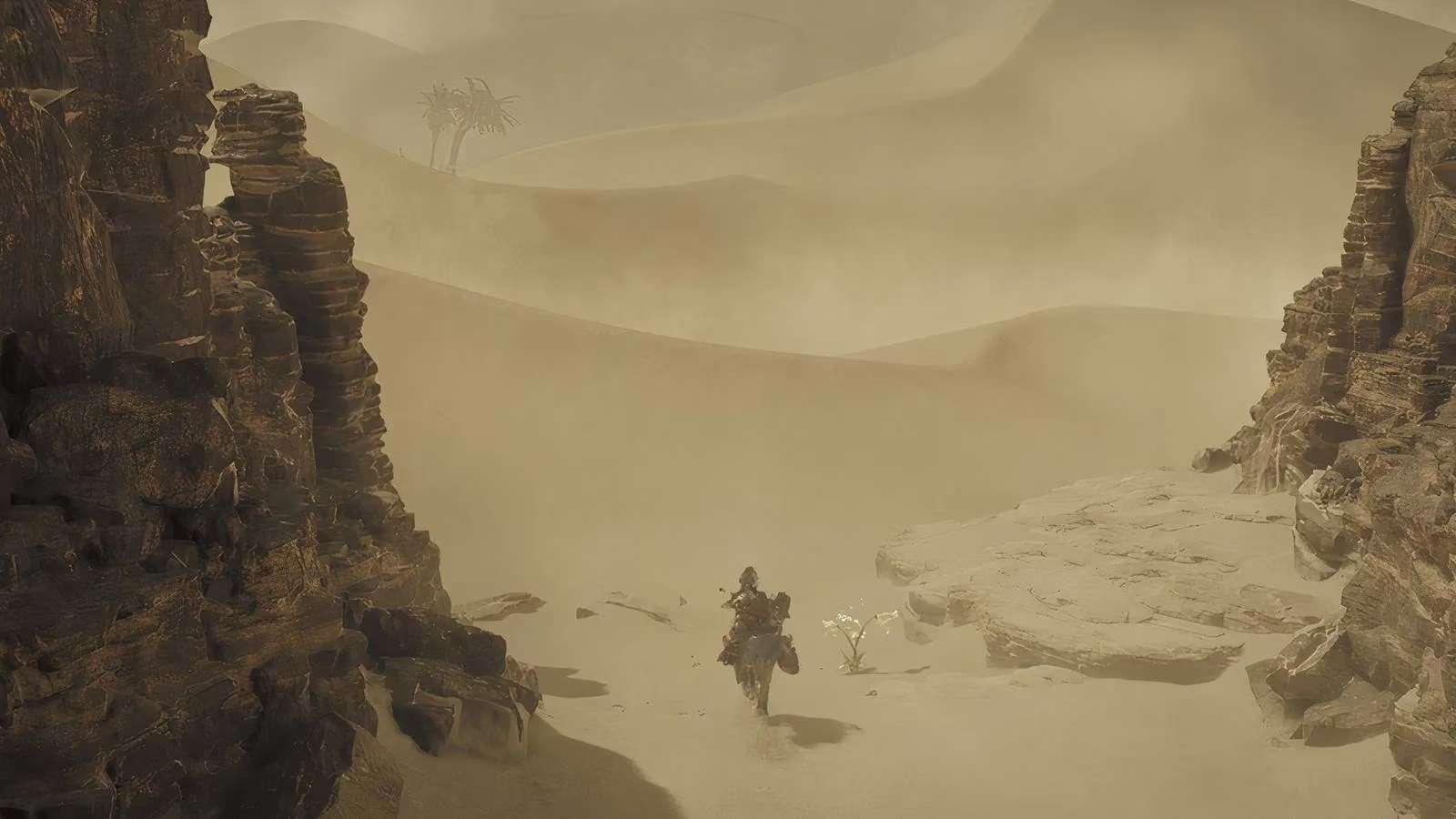
The Seikret, your new feathery steed, isn't just a pretty face with legs; it’s a mobile command center and escape artist rolled into one. While veterans might initially dismiss it as a mere Palamute re-skin, they’d be as mistaken as a hunter bringing a Fishing Rod to an Elder Dragon fight. This Bird Wyvern shines in a supportive role, allowing you to perform critical actions like eating a well-done steak, gulping a Mega Potion, or sharpening your blade while on the move—turning downtime into prime time. Its pièce de résistance? A single whistle summons it to scoop you up when you’re floored, whisking you away from danger like a corporate limo escaping a traffic jam. Forgetting to use your Seikret is like owning a Swiss Army knife and only using the toothpick.
Weapon Swapping: The Art of Preparedness
Gone are the days of committing to a single weapon for an entire hunt. Wilds lets you carry two weapons, accessible anytime you mount your Seikret. This isn’t just a quality-of-life feature; it’s a game-changer. For instance, Hunting Horn mains can now bring two horns with different buff melodies, essentially doubling their orchestral impact. The sin here? Becoming complacent and sticking to one weapon like a stubborn Barnos glued to a cliff face. Failing to switch when a monster’s weakness presents itself is like bringing a spoon to a sword fight—possible, but profoundly inefficient.
Targeting Monsters: It’s Not a Free-for-All
Not all monster parts are created equal. Treating every beast like a giant piñata you whack indiscriminately is a rookie mistake of legendary proportions. Here’s a quick guide to strategic targeting:
-
Blunt Weapons (e.g., Hammer, Hunting Horn): Aim for the head to score knockouts.
-
Severing Weapons (e.g., Great Sword, Long Sword): Focus on tails for cuts and extra carves.
-
Ranged Weapons: Exploit elemental weak points shown in the Field Guide.
However, the biggest blunder is assuming all monsters follow the same rules. For example, the fiery Quematrice’s tail can be broken with blunt force, no blade required. Always consult the Large Monster Field Guide before a hunt—it’s your cheat sheet to breakable parts, severable bits, and weaknesses. Ignoring it is like trying to assemble IKEA furniture without the instructions; possible, but fraught with swearing and misplaced parts.
The Wound Mechanic: A Scarlet Letter of Opportunity
Monster Hunter Wilds introduces the Wound mechanic: continuously attacking a specific body part causes a red spot to appear, making the monster “bleed” and changing damage numbers from yellow to dark orange. This isn’t just cosmetic; it significantly increases damage output. But here’s the kicker: not all weapons wound equally. In multiplayer, coordination is key. Let’s break it down:
| Weapon Type | Wound Proficiency | Ideal Role in Multiplayer |
|---|---|---|
| Dual Blades | ★★★★★ | Primary Wound exploiter |
| Hammer | ★★☆ | Part-breaker & stunner |
| Bow | ★★★☆ | Elemental weak-point focus |
| Great Sword | ★★★★ | Heavy part-severing |
Dual Blades users are the Wound virtuosos—let them focus on wounded areas while others break parts or cut tails. Ignoring this synergy is like having a symphony where everyone plays the kazoo; chaotic and painfully inefficient.
Common Pitfalls & Pro-Tips
Even seasoned hunters can stumble in Wilds. Here’s a quick list of avoidable sins:
-
🚫 Forgetting Seikret summons when knocked down.
-
🚫 Using the wrong weapon type for a monster’s breakable parts.
-
🚫 Ignoring Wounds in multiplayer, leading to DPS loss.
-
🚫 Skipping the Field Guide and attacking blindly.
-
🚫 Not leveraging two weapons for situational adaptability.
Engaging with these systems isn’t optional—it’s the difference between a hunt that feels like a graceful ballet and one that resembles a toddler’s tantrum in a china shop. Monster Hunter Wilds has lowered the barrier to entry without sacrificing depth, much like a gourmet meal that’s both delicious and digestible. By mastering the Seikret, weapon swapping, targeting, and Wounds, hunters can soar through Hunter Ranks faster than a Mernos on an energy drink. So, gear up, study up, and happy hunting—your next epic tale awaits, one well-placed strike at a time.