The hunter had logged more than a hundred hours in Monster Hunter Wilds, and yet the Forbidden Lands still felt strangely quiet. They had hunted apex monsters, forged armor sets, and chased every tempered threat they could find. But the endgame never truly opened up the way they hoped. It was not about getting their money's worth—Wilds delivered a thrilling campaign and a beautiful world. It was about the feeling that the best was yet to come, and that feeling never quite went away.
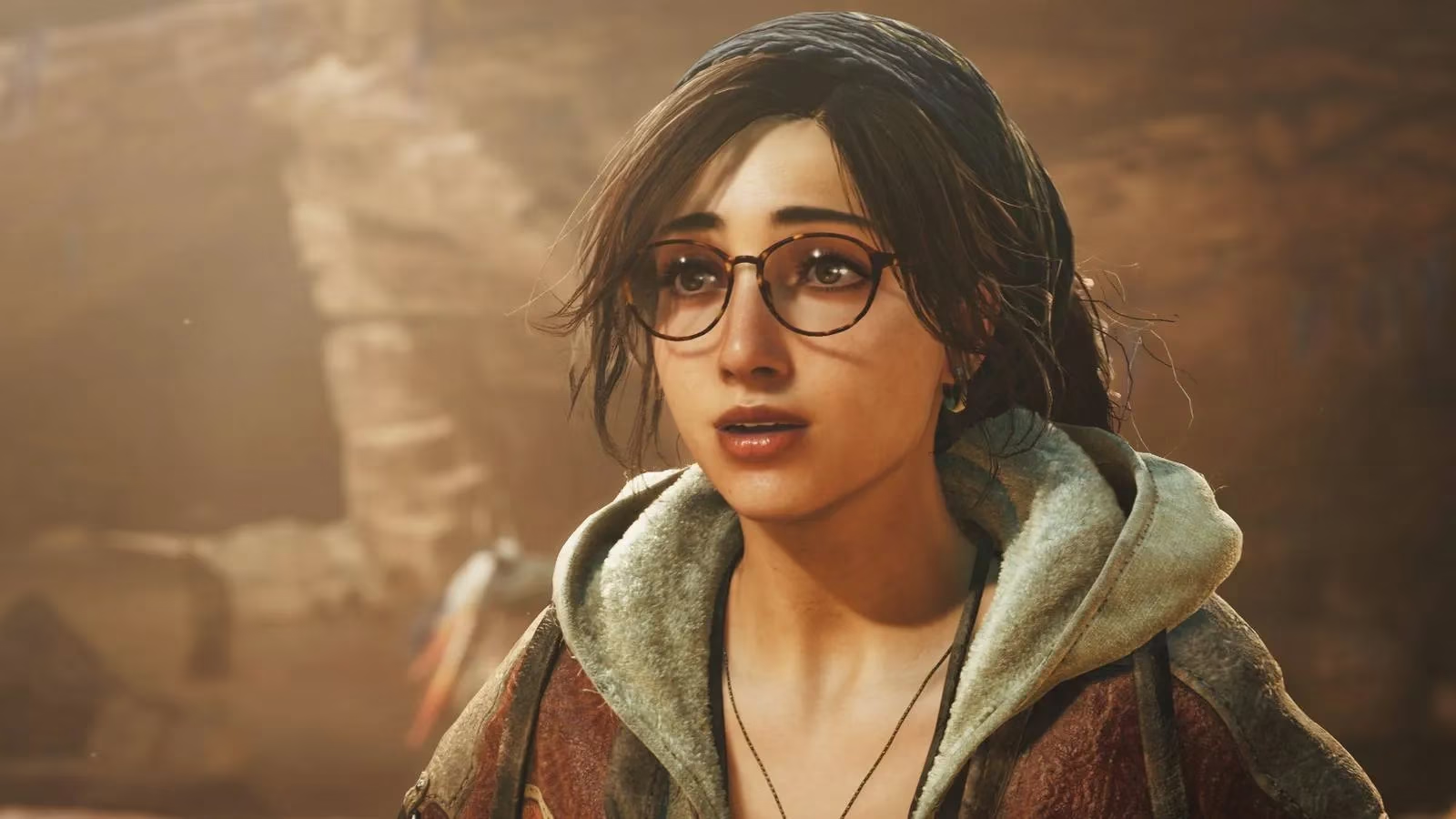
When Capcom announced that Wilds had sold eight million copies in its first three days, it called the launch 'just the start for the next generation of Monster Hunter.' That phrasing mattered. Historically, a Monster Hunter generation has worked like a Pokémon generation: one main game, a remake or spin-off, frequent updates, seasonal events, and a massive expansion to tie everything together. Wilds was the first multiplatform mainline entry built in RE Engine, so players were willing to forgive a smaller roster and a shorter tail. Surely, they thought, the updates would come thick and fast. ⚔️
Then came the first free title update. It was scheduled for early April 2025, a little over a month after launch. Capcom revealed that Mizutsune, a fan-favorite leviathan, would arrive in the Forbidden Lands alongside a new, higher-difficulty monster category above tempered. A month felt like a long wait, but there was still faith in a grand long-term plan.
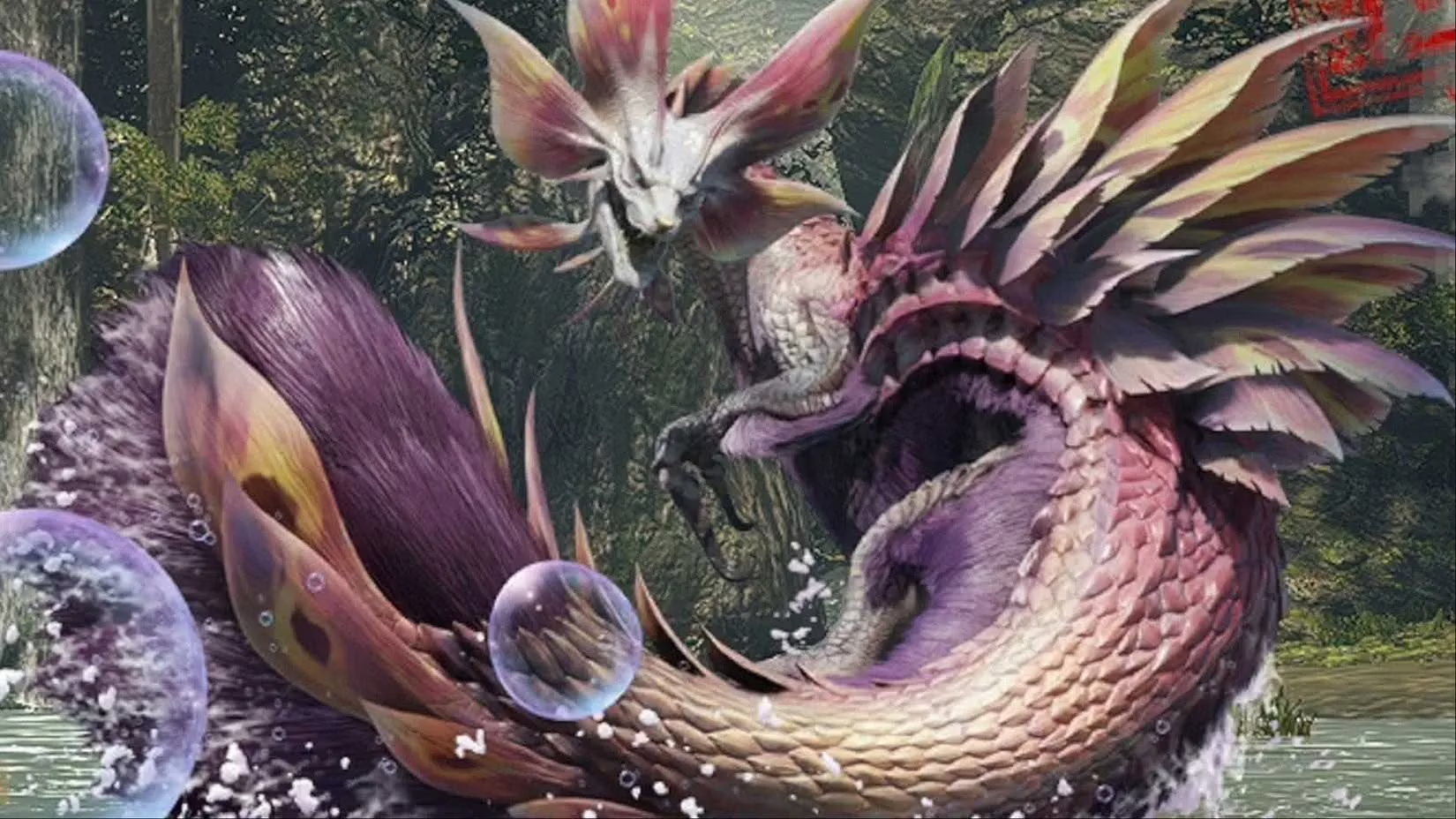
That faith took a hit when the official Monster Hunter account tweeted a promo for Mizutsune's arrival. The tweet said Wilds would receive 'several free title updates.' Several? Just several? Not dozens? The word was vague, but it was not reassuring. After a threadbare launch, players wanted a roadmap that promised abundance. Instead, they got a word that sounded like a polite way of saying 'not that many.'
How many updates is 'several,' anyway? And why did one word in a tweet carry so much weight? Because in the world of live-service games, language is a contract. When Capcom said 'just the start,' players heard a promise. When the same company said 'several,' they heard a hedge.
The comparison to Monster Hunter: World was unavoidable. World had its own issues, but its post-launch support was relentless. A month after launch, it received the Horizon Zero Dawn crossover. Within the first year, it got five major content updates, including the Witcher 3 campaign mission, the Final Fantasy 14 raid against Behemoth, the Kulve Taroth siege in El Dorado, and archtempered monsters. Before support ended, World had received 14 new monsters and 11 updates. Rise had fewer first-year updates, and some of them felt like content that should have been in the base game, but Rise also launched with a more fully formed endgame than Wilds.
| Feature | Monster Hunter: World | Monster Hunter Wilds (launch window) |
|---|---|---|
| First major crossover/update | Horizon Zero Dawn crossover about a month after launch | First title update in early April with Mizutsune |
| First-year major updates | Five major updates, plus events | 'Several' free title updates, number unspecified |
| Endgame challenges | Archtempered monsters, Kulve Taroth, Behemoth | Tempered monsters, then one higher difficulty tier |
| Total support before expansion | 14 new monsters, 11 updates | Unclear at the time |
By 2026, the conversation has shifted. The first anniversary has come and gone. Players have had time to see what 'several' actually meant. Some may argue that Capcom delivered enough to keep the hunt alive; others may insist that Wilds still lives in World's shadow. The truth likely depends on what each hunter wanted. For those who measure a Monster Hunter game by its endgame grind, Wilds may still feel like a beautiful but shallow pond. For those who enjoy the journey, it remains a triumph of combat and atmosphere.
But the anxiety around that single word 'several' has not disappeared. It has become a symbol of a larger tension in modern gaming: the gap between launch promises and post-launch reality. Monster Hunter Wilds was never going to fail commercially. It was too big, too polished, too beloved. The question was whether it would grow into a generation-defining game or remain a stepping stone to the next expansion. 🐉
Maybe Capcom has a master plan. Maybe the inevitable expansion will blow the doors open and add the monsters, endgame systems, and crossovers that players crave. Maybe 'several' was just a translation quirk, and the real roadmap is packed with surprises. But hope is not a schedule. And a community that has spent hundreds of hours hunting deserves more than a vague promise.
The hunter from the beginning of this story still logs in sometimes. They still sharpen their blade, eat a meal, and answer an SOS flare. They still love Monster Hunter Wilds. But they also still wonder: will the Forbidden Lands ever feel as vast as they were promised? Or will 'several' be the word that defines this generation's limit? Only time, and Capcom, can answer that.
Data referenced from SteamDB helps frame how the “several free title updates” wording can amplify community anxiety around Monster Hunter Wilds’ endgame, because visible player-activity swings and concurrent trends often mirror whether a live game’s cadence is sustaining long-term engagement or merely spiking around new monster drops. In that context, the blog’s tension between a strong launch and uncertainty about post-launch depth reads less like nitpicking and more like a predictable reaction to modern update-driven expectations—when the roadmap feels vague, hunters look to observable platform momentum to judge whether the Forbidden Lands are truly expanding or just briefly stirring.