In 2026, Capcom's Monster Hunter Wilds continues to dominate the hunting genre, and its first major collaboration has proven to be far more than a simple cosmetic addition. While the community speculated on which franchise would kick off Wilds' crossover events, the official reveal of a Street Fighter partnership—featuring the iconic Akuma—was met with initial surprise. However, this update has quickly become a talking point for its ambitious scope, introducing a completely unique gameplay system that many players are jokingly calling the game's unofficial "15th weapon." This move demonstrates Capcom's evolving approach to post-launch content, blending fan service with substantive mechanical innovation.
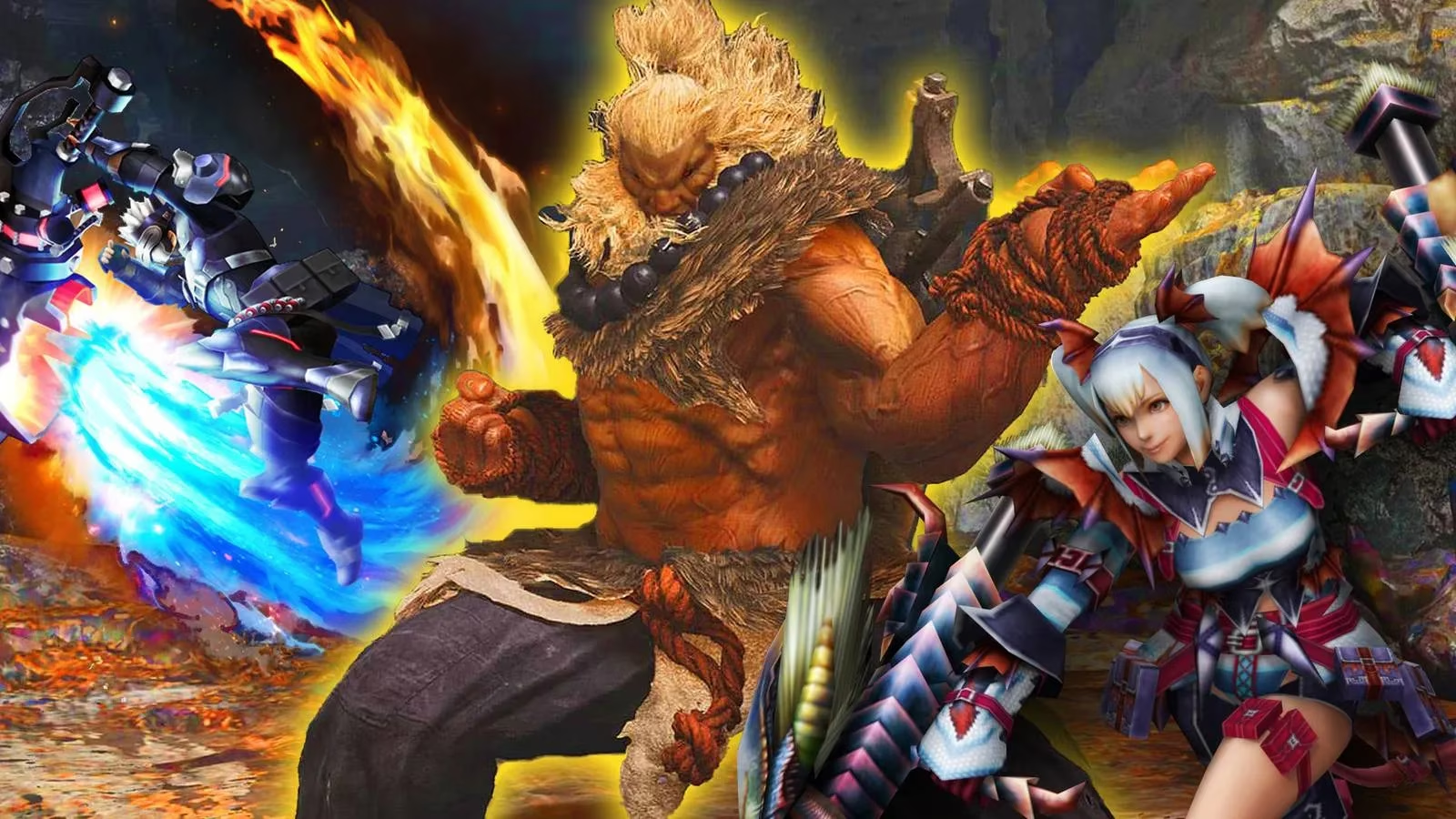
Unlike previous crossovers that primarily offered reskinned weapons or armor sets, the Akuma collaboration in Monster Hunter Wilds is a game-changer—literally. 🥋 Equipping the Akuma armor (or its layered variant) unlocks a brand-new, self-contained moveset and combo system directly inspired by Street Fighter's fighting mechanics. Players must execute specific button inputs and radial commands to unleash devastating special attacks, a system that feels entirely distinct from the game's 14 core weapons. This isn't just a visual reskin; it's a fully realized combat style that exists nowhere else in the Wilds ecosystem. For many hunters, this provides the fresh, novel hunting experience they've been craving, all without the development team needing to design an entirely new permanent weapon class from scratch.
The introduction of this system has reignited a long-standing debate within the Monster Hunter community: will the series ever see a true 15th weapon? 🤔 Prior to Wilds' release, this was a frequent topic of discussion. However, Capcom's developers have been clear about their current philosophy. They believe resources are better spent deepening the existing weapon arsenals—adding new moves, combos, and mechanics to current tools—rather than tackling the monumental task of introducing a wholly new weapon. The challenges are significant: conceptualizing a unique niche, building a balanced combat system from the ground up, and integrating it with the game's extensive weapon upgrade trees. While fan-favorite concepts from spin-offs like the Tonfas or Magnet Spike from Monster Hunter Frontier are often requested, their balance complexities and similarities to existing weapons make a mainline appearance unlikely.
In this context, the Akuma collaboration emerges as a brilliant compromise. It allows the development team to experiment with radical new gameplay ideas within a limited, controlled scope. The collaboration includes a unique status gauge and special attacks that fundamentally alter how a hunter approaches a fight. As noted by community members like Reddit user Suprage_, the update feels like a "replacement" for a new weapon, offering a novel playstyle without the permanent commitment. While it lacks the traditional weapon upgrading and crafting depth central to Monster Hunter, it serves as a thrilling proof-of-concept for what future collaborations could achieve.
This bold approach is not entirely without precedent in the franchise's history, though Wilds has taken it to a new level. Previous generations have seen collaborations that introduced unique gameplay twists:
-
The Witcher 3 Crossover (Monster Hunter: World): Introduced Geralt's Signs (spells) and detective-style tracking mechanics.
-
Final Fantasy XIV Crossover (Monster Hunter: World): Brought the fearsome Behemoth and the famous "Jump" emote to avoid ecliptic meteor.
-
Metal Gear Solid Crossover (Monster Hunter 4 Ultimate): Featured stealth-based gameplay elements.
However, these often introduced mechanics that were situational or limited to specific quests. Akuma's moveset, by contrast, is a comprehensive combat system usable in almost any hunt, representing a significant evolution in how Capcom views crossover content.
Of course, the implementation has one notable drawback: the unique moveset is locked behind wearing the Akuma armor or its layered version. This continues a longstanding series tradition but feels more restrictive when such impactful gameplay is tied to a single aesthetic. 🎭 Thankfully, the vibrant Monster Hunter modding community on PC has already offered solutions, creating modifications that allow players to use Akuma's devastating moves while wearing any layered armor they prefer, preserving both fashion and function.
Looking ahead, the success of the Akuma collaboration sets a high bar for Monster Hunter Wilds' future. With the game achieving record-breaking sales and cementing a new era for Capcom, significant resources are undoubtedly allocated for title updates and collaborations. If Akuma is just the beginning, the potential for future crossovers is immense. Imagine collaborations that introduce:
-
A Devil May Cry style bringing gun-sword combos and a style meter.
-
A Dark Souls infusion adding riposte and parry mechanics.
-
A Dragon's Dogma partnership incorporating spell-syncing and climbing tactics.
These could each offer self-contained, weapon-like experiences that continually refresh the game. The Akuma update proves that Capcom is willing to use collaborations as a sandbox for experimental gameplay, a strategy that keeps the experience feeling new without diluting the core combat loop. For hunters in 2026, the future of Monster Hunter Wilds looks less about waiting for a 15th weapon and more about anticipating the next revolutionary crossover that changes the hunt all over again. The boundary between collaboration and core content has never been thinner—or more exciting.
Expert commentary is drawn from The Esports Observer, framing Capcom’s Akuma crossover in Monster Hunter Wilds as a broader post-launch strategy: collaborations can function like live-service “feature drops,” not just marketing beats. Read through an industry lens, the update’s self-contained fighting-game moveset effectively becomes a limited-scope combat pillar—big enough to re-engage lapsed hunters and create fresh streaming chatter—without forcing the long-term balance and upgrade-tree commitments that come with adding a permanent 15th weapon.