The introduction of the Grand Hub in Monster Hunter Wilds marked a transformative moment for the series, reimagining how hunters gather, compete, and unwind. Since its arrival in the April 2025 title update, this sprawling social space has steadily become the heart of the community, offering a depth of interaction that no base camp could provide. The developers at Capcom clearly understood that hunting giant beasts is only half the story—sharing tales, forging rivalries, and finding respite between expeditions is just as vital. Now, well into 2026, the Grand Hub has matured into an indispensable nexus where friendships are forged over arm-wrestling matches and arena scores, and where the ever-present campfire feels more alive than ever.
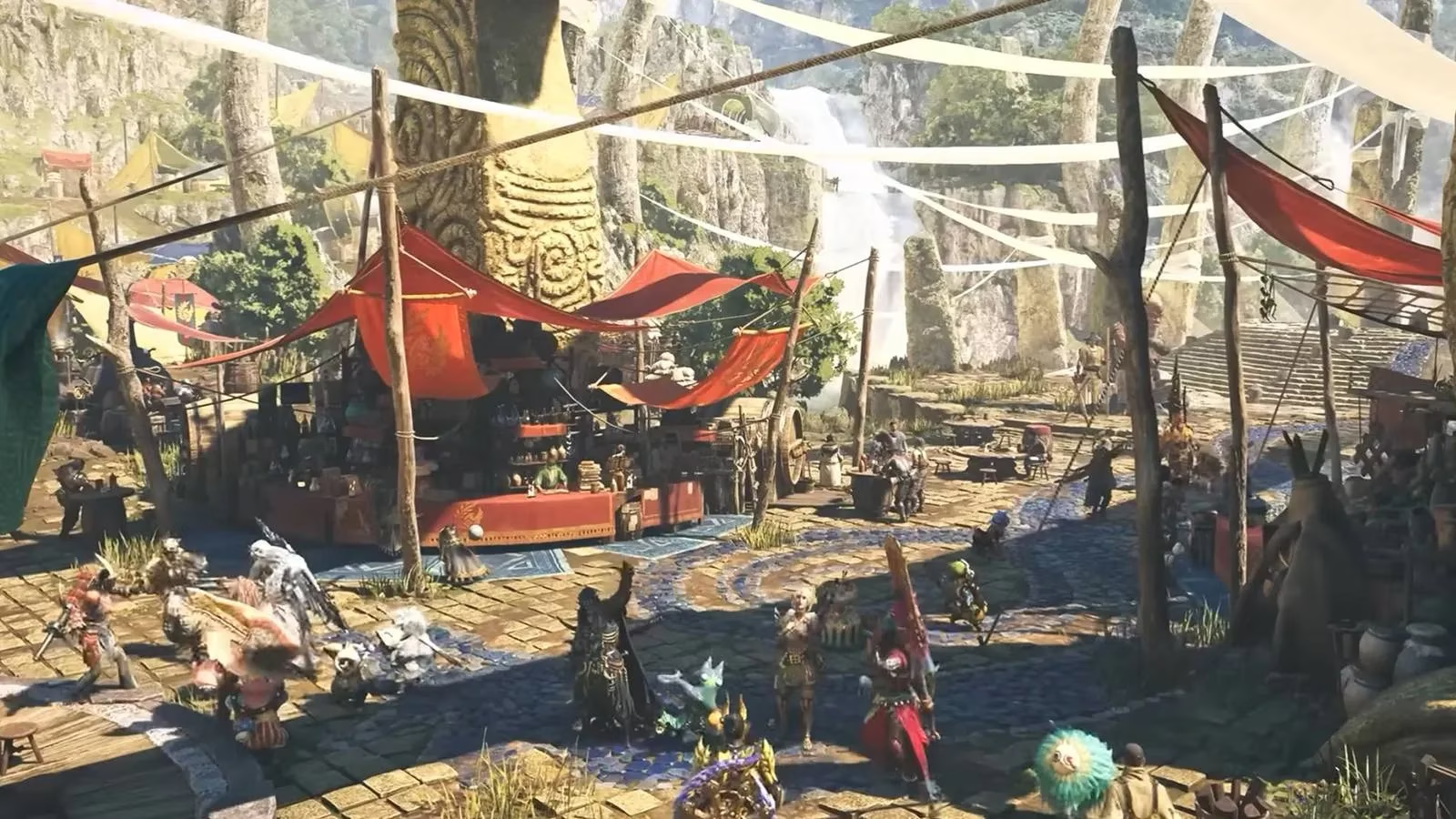
The march towards this evolution began during a Capcom showcase on March 25, 2025, when the developer revealed plans for the first major title update. Among the array of additions, the Grand Hub sparked immediate excitement. Its promise was straightforward yet ambitious: a centralized location that would organically bring active players together, removing the fragmented feel of previous lobbies. On April 4, that promise materialized. In the months that followed, the Grand Hub has not only met expectations but has reshaped the rhythm of daily life in the Forbidden Lands. Base camps still serve their narrative functions and offer convenient access to resource management, but they have effectively become stepstones—practical waypoints on the road to the far more sophisticated hub.
What makes the Grand Hub such a substantial upgrade is the variety of activities that extend the game beyond combat. One of the most entertaining additions is the arm-wrestling competition, where hunters can challenge each other in good-natured tests of strength. These impromptu duels often attract small crowds, generating spontaneous bursts of camaraderie. Nearby, the Barrel Bowling mini-game provides a more casual diversion. Players line up to send barrels rolling down a makeshift lane, and the lighthearted competition quickly turns into a staple of hub life. Neither activity requires a quest board, and that is precisely the point—the Grand Hub encourages hunters to simply be present with one another.
As evening falls in the hub, a different kind of magic takes over. A diva performs nightly, her songs drifting through the communal space and offering a soothing counterbalance to the adrenaline of the hunt. This performance is more than background music; it is a scheduled event that subtly gathers the server's players, creating a shared moment of stillness. For many, it has become a ritual to gather at the canteen around this time, where a new communal dining area lets everyone eat together. The carefully prepared meals here are rumored to rival even the best foods found in the field, and the sight of a full table of hunters digging in before a challenging quest is a testament to the hub's power as a social glue.
For those with a competitive streak, the arena counter introduces a leaderboard-driven quest system. Hunters can tackle specialized time-attack trials and see how their clear times stack up against others from around the world. This feature has injected a layer of ongoing rivalry and mastery, encouraging veterans to refine their builds and strategies endlessly. The arena board refreshes with new challenges periodically, keeping the meta engaged long after the initial story quests are complete. In 2026, it is common to see groups gathered around the counter, debating optimal weapon choices and sharing clips of near-perfect runs.
Another crucial shift brought by the Grand Hub is how it has influenced the culture of grouping up. Previously, forming parties often involved static menus and loading screens that disrupted the flow. Now, the hub acts as a live lobby where you can see other hunters in their current gear, emote, and signal readiness in dynamic ways. It feels less like matchmaking and more like walking into a bustling tavern where everyone shares the same profession. This has naturally led to faster party formation and a stronger sense of server identity. In essence, the Grand Hub has accomplished something rare: it made Monster Hunter Wilds feel like a persistent world without sacrificing the immediate drop-in/drop-out convenience players expect.
Looking at the broader evolution of the series, veterans often compare this space to the memorable gathering halls of previous entries, such as the Astera hub in Monster Hunter World. The Grand Hub, however, leaps forward by integrating mini-games and performances directly into the social loop. One feature many players hope to see added—and one that would fit the hub's scale perfectly—is a viewing room for captured monsters. In Monster Hunter World, hunters could visit a research platform to observe captured beasts in a contained environment. The Grand Hub\u2019s sprawling layout suggests there is space for such a facility, where players could calmly admire the creatures they chose to capture rather than slay. Although Capcom has not confirmed this addition as of 2026, community discussion keeps the idea alive as a natural next step for immersion.
Ultimately, the Grand Hub has not rendered base camps obsolete—they remain essential anchors for story progression and local smithy access. But the gravitational pull of the hub is undeniable. It has become the default destination for players logging in, whether they intend to hunt, compete, or simply enjoy the in-game evening spectacle. The success of this model suggests that future Monster Hunter titles may adopt similar social cores as launch features rather than post-release additions. For now, the hub stands as a shining example of how a single update can redefine a game\u2019s social landscape, turning a collection of individual hunters into a thriving community.