Like many hunters in Monster Hunter Wilds during 2026, I used to chase raw damage above all else. That changed after a tempered monster turned my careless hunt into two quick carts. Since then, I have made Shock Traps a permanent part of my item loadout. These deployable tools briefly stun any monster that gets too close, which opens a window for a wound-breaking hit, a heavy combo, or a smooth capture using tranq bombs. I now keep a steady supply of Shock Traps in my pouch, and the routine below is exactly how I restock them.

Why I Always Carry Shock Traps
A Shock Trap is more than a capture tool. When a monster is exhausted, enraged, or charging across the arena, a well-placed trap can interrupt its momentum and turn a dangerous situation into free damage. I often use it to pin a monster while I line up a focused strike on a tenderized weak spot or help a teammate sharpen safely. Not every monster is vulnerable to stun, but most regular targets are. Because captures can produce different rewards than slays, the trap also gives me control over how I end a hunt.
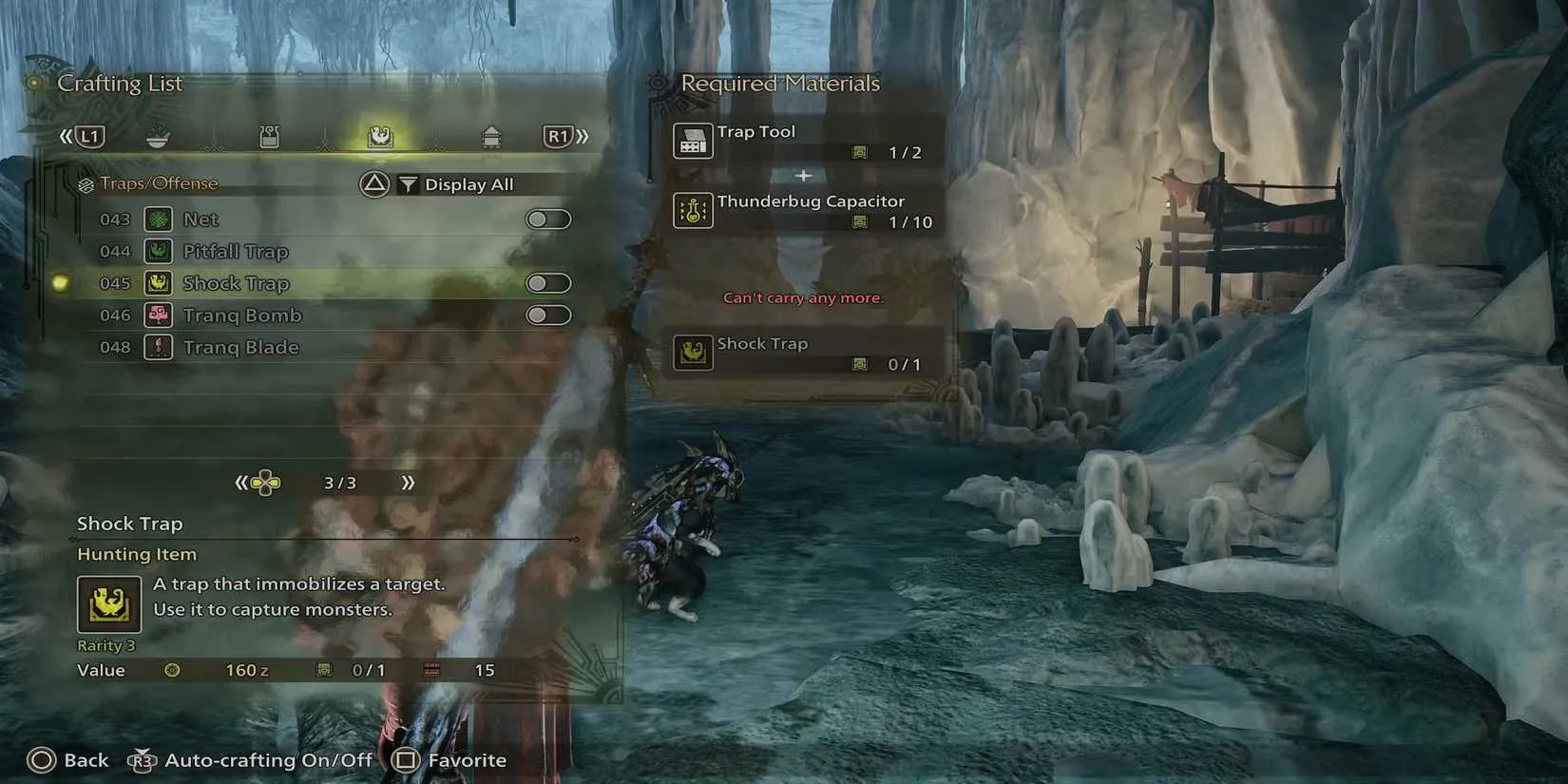
Crafting Recipe and Menu Location
The crafting recipe is very simple:
| Ingredient | Quantity | Best Source |
|---|---|---|
| Trap Tool | 1 | Provisions vendor in any base camp for 200 Zenny each |
| Thunderbug Capacitor | 1 | Gathering from Thunderbugs or assigning Murtabak as a Material Retriever |
To craft a Shock Trap, open the menu and select Crafting List. From there, tab over to the third option, Traps/Offense. The Shock Trap appears halfway down the third page. Some main story quests and side quests do reward a few traps, but those are not repeatable, so crafting is my long-term solution.
Buying Trap Tools in Bulk
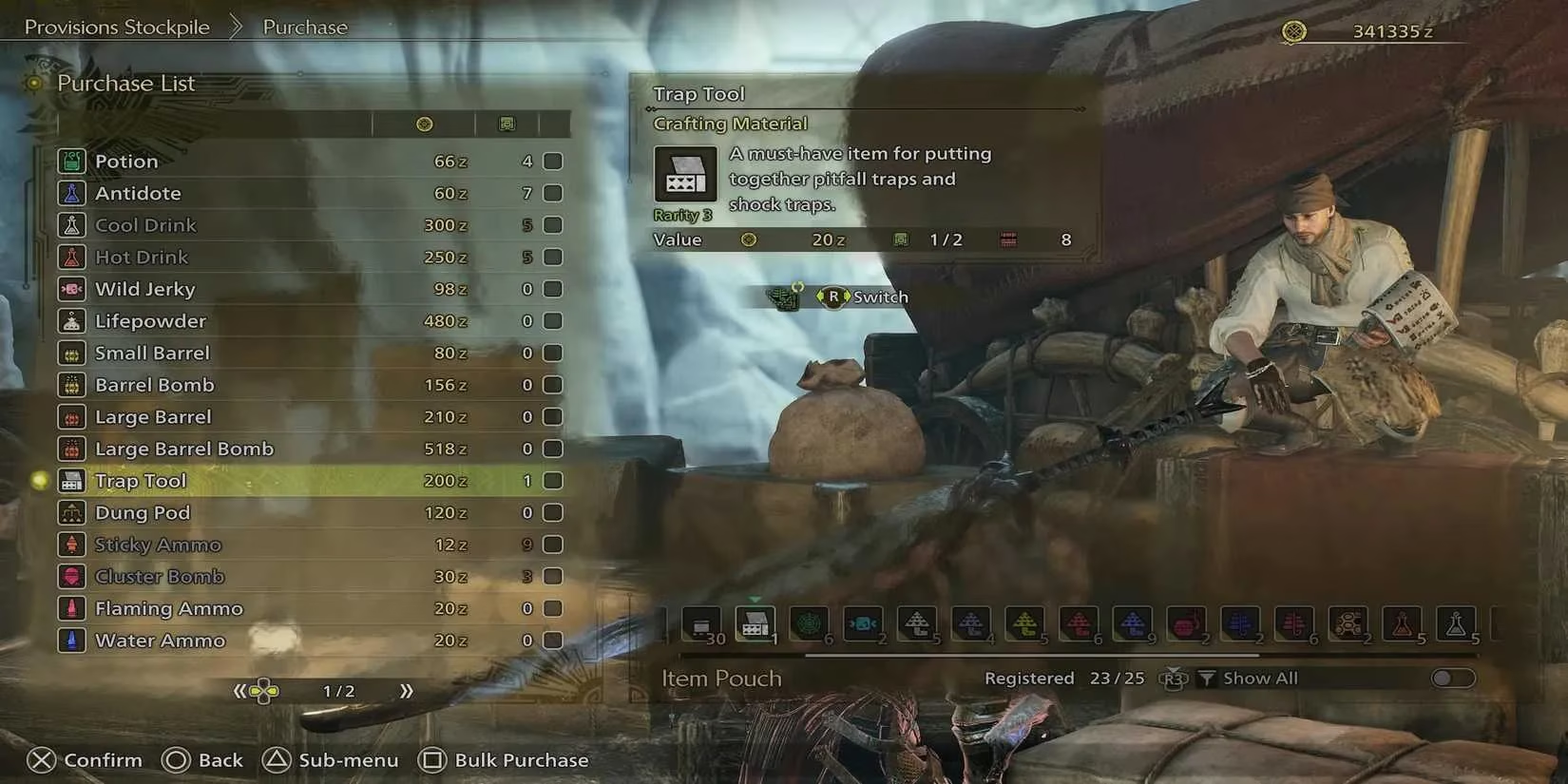
The Trap Tool is the real bottleneck for any trap-based loadout. Unlike Thunderbug Capacitors, you cannot find Trap Tools by gathering in the field. They are sold only by the provisions vendor at base camp in each region. Each Trap Tool costs 200 Zenny, which is cheap if you have a decent money-making loop from optional quests or selling excess monster parts. I buy out the entire stock, then use my tent to advance time by one in-game day. This resets the vendor inventory, letting me buy another full stack immediately. Repeating this process a few times gives me enough Trap Tools to craft dozens of traps.
Thunderbug Capacitor Farming Locations
Thunderbug Capacitors come from looting Thunderbugs. They do not spawn in every region, so I always head to the Windward Plains or the Ruins of Wyveria. The Windward Plains is the better farm because Thunderbugs appear in several easy-to-reach spots: Area 1, Area 3, and the northern section of Area 2. I usually start in Area 1, loop into the northern part of Area 2, and finish in Area 3 before fast traveling back to camp. This short route regularly gives me enough capacitors for a solid batch of Shock Traps.
Passive Gathering With Murtabak
If I need materials while hunting other targets, I rely on Murtabak. After unlocking him as a Material Retriever, I can assign him to search for Thunderbug Capacitor specifically. Since this item is rated as a three-star material, Murtabak tends to return with a useful amount when I prioritize that search. This passive income keeps my capacitor stock healthy even when I do not want to spend time gathering in the plains.
My Quick Restock Routine
When I notice my Shock Trap supply dropping, I follow this order:
-
Visit the provisions vendor at base camp and buy Trap Tools.
-
Use the tent to skip one in-game day if I need more Trap Tools.
-
Set Murtabak to prioritize Thunderbug Capacitors.
-
Fast travel to the Windward Plains and gather Thunderbugs from Area 1, northern Area 2, and Area 3.
-
Open Crafting List, tab to Traps/Offense, and craft my Shock Traps.
-
Save the updated item loadout and return to the hunt.
Final Tips for New Hunters
I recommend not relying on quest rewards for Shock Traps because those are finite. Instead, make the vendor-and-gather loop part of your usual preparation. Carry a few extra Trap Tools and Thunderbug Capacitors in your item pouch if you have space, so you can craft more traps during long expeditions. Use traps when a monster is exhausted or sleeping for the easiest setups, and remember that capturing can sometimes give you access to materials that are harder to get from carves. With a little routine, you will never run out of Shock Traps again.