As the first rays of the dawn crept over the Windward Plains, a lone hunter stood before Gemma's forge, her thoughts consumed by a singular obsession: the perfect Artian weapon. In the ever-evolving world of Monster Hunter Wilds, there had always been a certain allure to weapons carved from the very bones of the beasts they had felled. But the Artian relics promised something more — a weapon that could be shaped and tuned to her every whim, a partner as lethal as her own instincts. Little did she know, the journey to craft the ultimate Artian arm would be a tale of patience, calculated risks, and a few hard lessons learned in the smoldering embers of the forge.
Artian weapons were not your ordinary monster-bone blades or metal-forged hammers. They existed as echoes of an ancient civilization, relics that could be reassembled into formidable tools of destruction. Unlike the static traits of most weapon trees, an Artian weapon allowed a hunter to hand-pick its fundamental characteristics and then refine them through a randomized upgrade system. The result could be something that rivaled even the most fearsome elder-dragon crafts — if luck smiled upon you.
The hunter’s first encounter with an Artian Part came after a grueling battle against a Tempered Chatacabra, the beast’s hardened scales glinting under the moon. As the dust settled, among the spoils was a mysterious icon, sharp-edged and twinkling with a question mark. When appraised, it transformed into a Rarity 6 Artian Part — a disc, humming with latent water energy. Gemma’s eyes lit up when the hunter returned to camp. Two new tabs appeared at the forge: Forge Artian Weapon and Reinforce/Dismantle Artian Weapon. The possibilities felt endless, but so did the questions. Where would she find more parts? And how could she ensure they coalesced into a weapon worthy of her name?
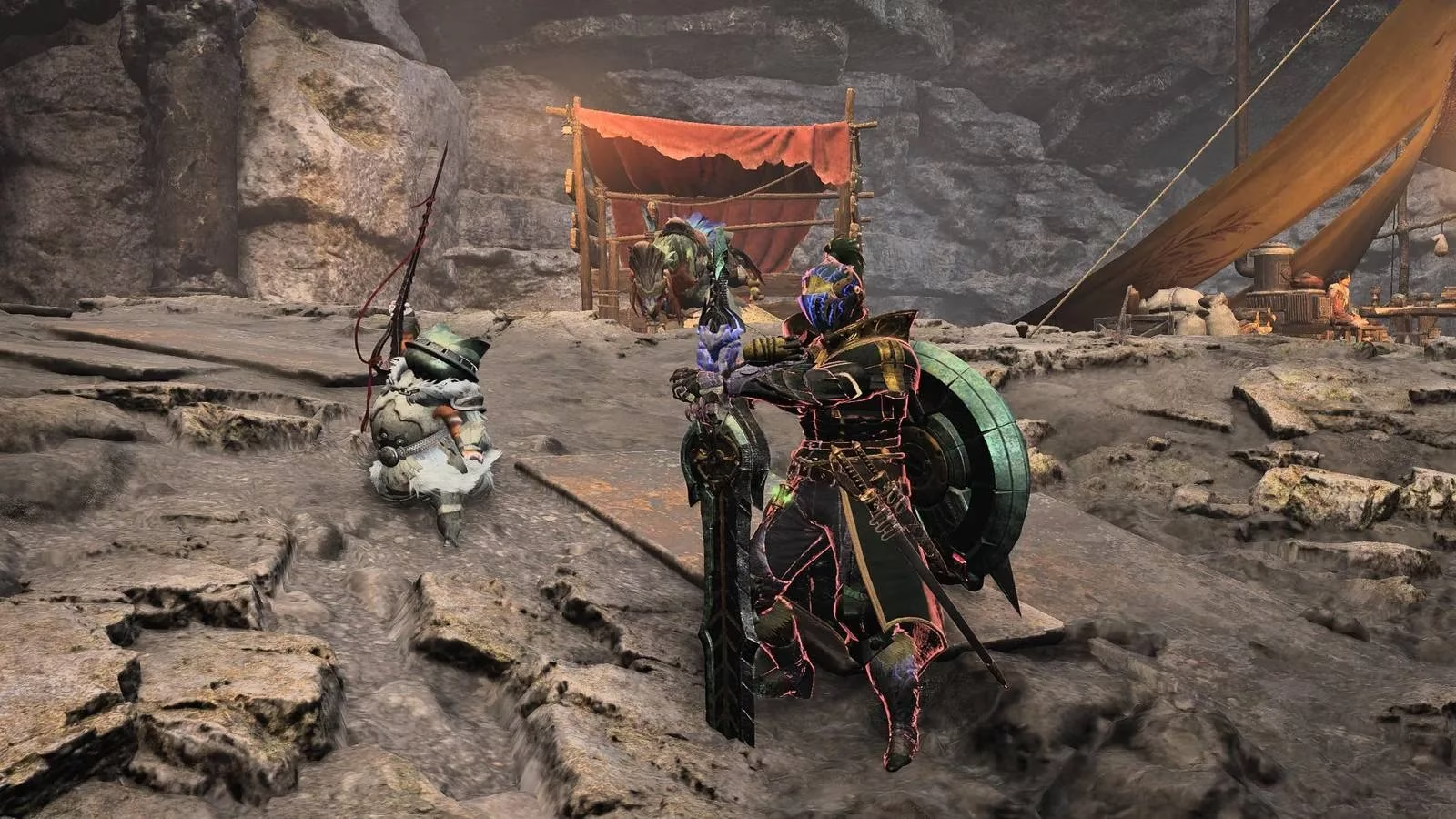
The hunt for Artian Pieces became an obsession in itself. She learned that any quest featuring a tempered monster would reward these enigmatic parts, but their rarity was directly tied to the star rank of the undertaking. Six-star threats coughed up Rarity 6 pieces, while seven-star nightmares offered the coveted Rarity 8 variants. Each part belonged to one of four categories: blades, tubes, discs, or devices. Every weapon type demanded a specific trio — dual blades required two blades and a single disc, while a lance demanded a blade, a tube, and a device. The hunter carefully noted her target combinations, marking quests that showered multiple part icons to maximize her yield.
But raw parts were only half the equation. As she laid out her collection on the workbench, she noticed each piece shimmered with an elemental affinity — fire, water, thunder, ice, or dragon — and bore an Artian Bonus: either Attack Infusion or Affinity Infusion. To forge a weapon with a desired element, the majority of the three parts had to match. Two water parts and one fire would produce a water-elemental weapon, but three mismatched elements left the blade utterly mundane. "Could she afford to gamble on a lifeless weapon?" she mused, staring at two coveted fire blades and a tempting dragon disc. The answer was a resounding no — consistency was key for her elemental builds.
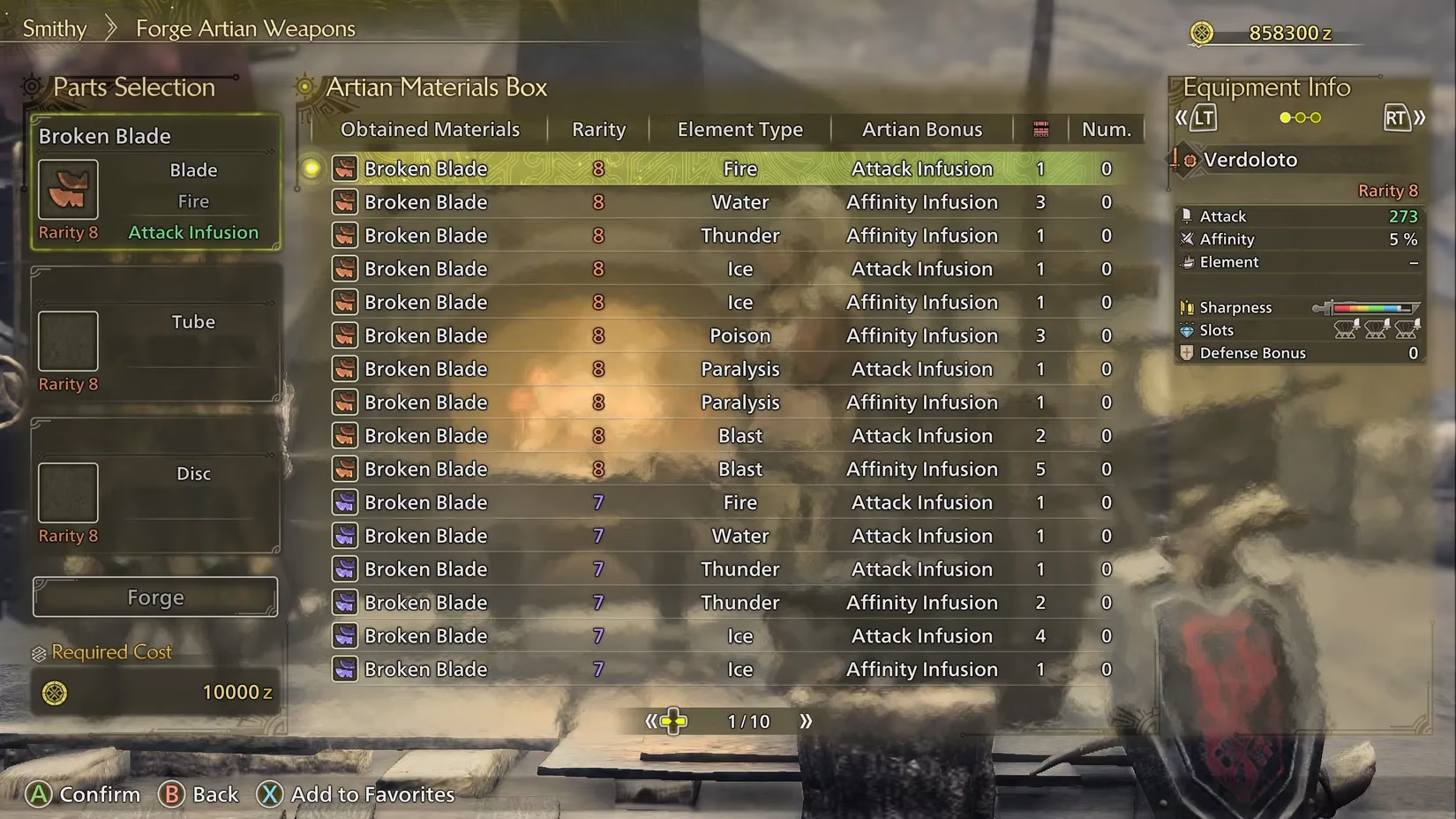
The Artian Bonus proved equally strategic. If all three parts bore the same bonus — say, Attack Infusion — the resulting weapon would be a brutal powerhouse. Mixing bonuses created a more balanced weapon, but the hunter wanted raw, unadulterated damage. She gathered three thunder-imbued blades, each with Attack Infusion, and fed them into the forge. The hammer that emerged crackled with lightning and promised earth-shattering blows. Yet the real alchemy lay in reinforcement.
Every Artian weapon could be reinforced up to five times, each level drawing from a pool of 3,000 points fed by strange crystalline ores. Drearisite, the most common, offered 20 points; Specklite gave 100; Argecite provided 200; and the rare Oricalite contributed a hefty 300. The hunter had been hoarding these materials from tempered hunts, and now she poured them into her new hammer. With each reinforcement, the weapon received a random Bonus — Affinity Boost, Attack Boost, Sharpness Boost, or Element Boost. Her heart pounded with every click of the upgrade. Would the game grant her the Attack Boosts she craved, or would it mock her with Sharpness improvements she didn’t need?
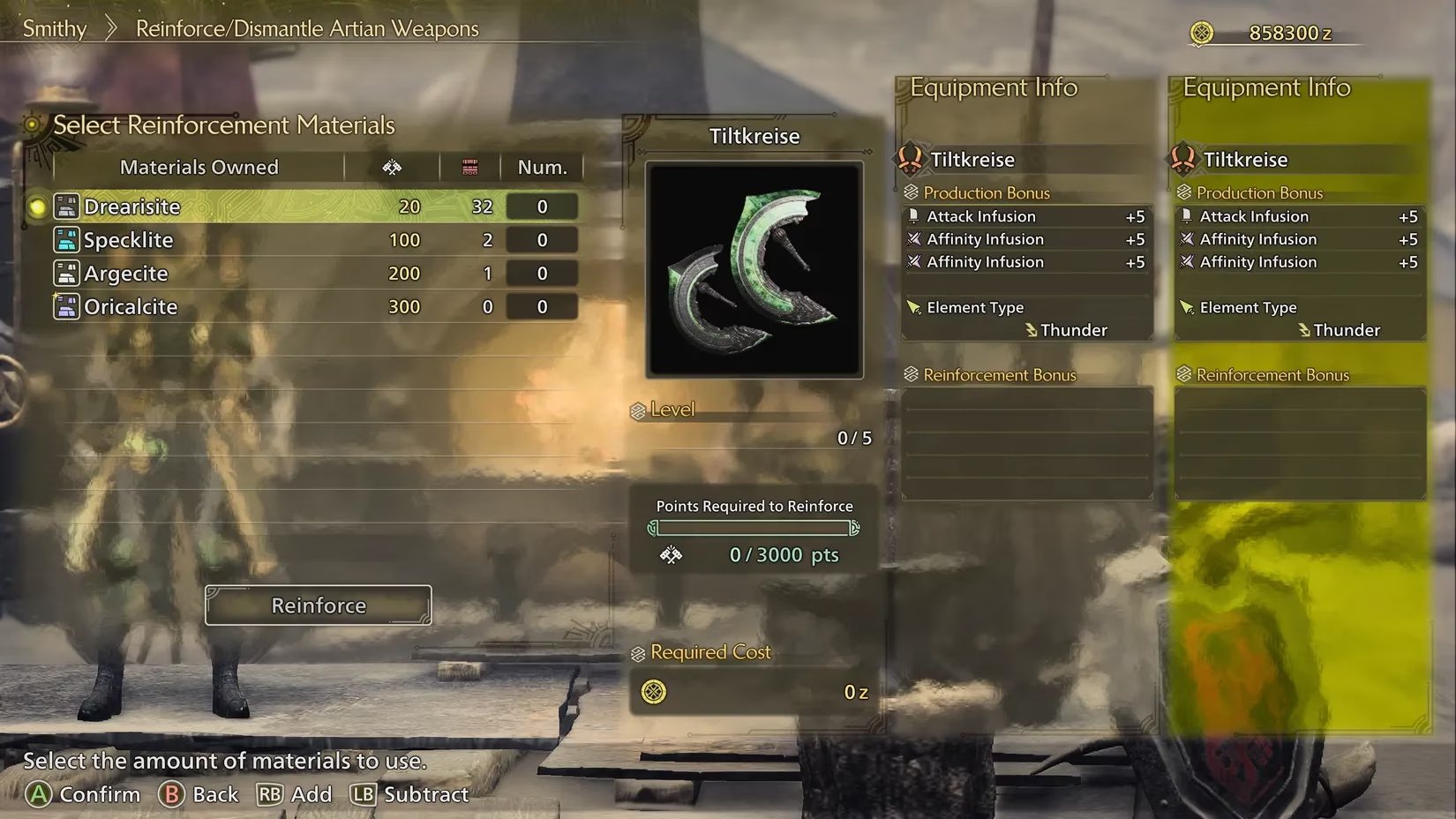
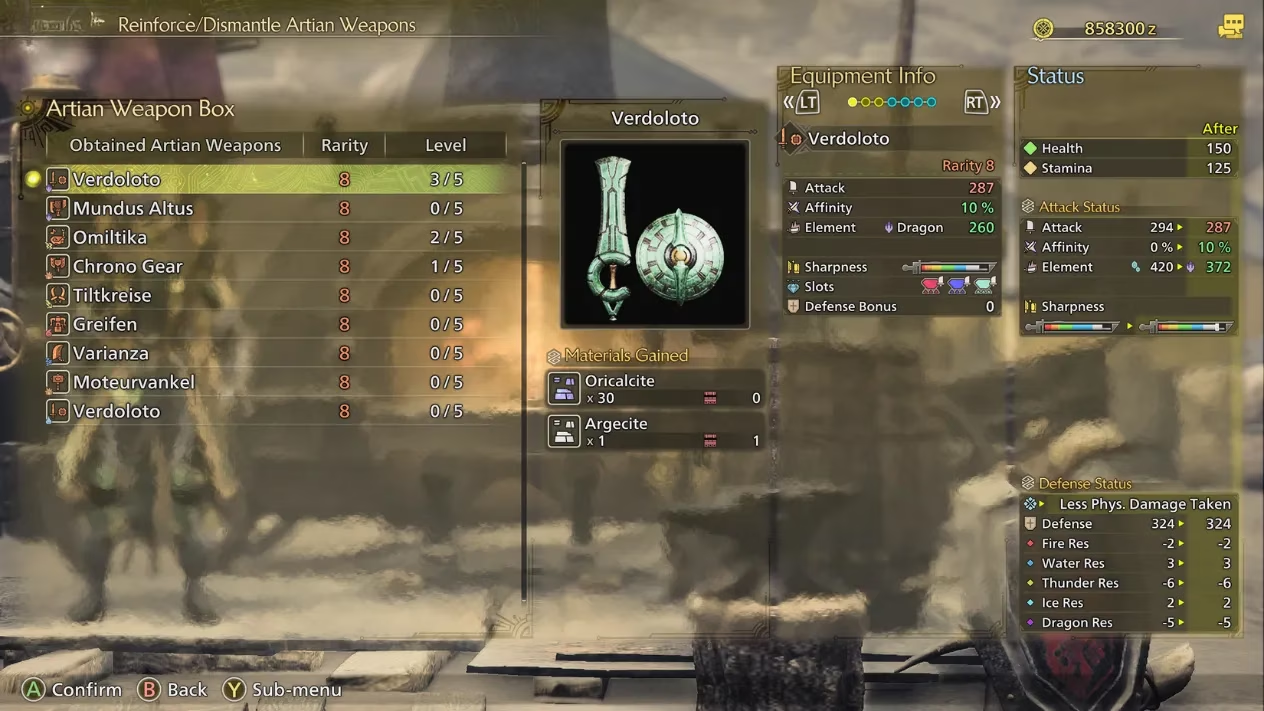
Her first attempt was a lesson in disappointment. The hammer received a medley of Sharpness and Element Boosts, while her raw attack languished untouched. For an element-focused build, perhaps that would have sufficed. But her heart beat for physical carnage. Undeterred, she turned to the dismantle option. With a few keystrokes, the hammer was unmade, and every single reinforcement material — every Specklite, every Oricalite — flowed back into her inventory. The three thunder blades were lost, but the ores remained, ready to fuel another roll of the dice. This merciful system meant that even in failure, progress was never truly wasted.
Over the following weeks, the hunter became a seasoned Artian artisan. She tracked seven-star tempered quests relentlessly, hoarding Rarity 8 parts like a dragon with its treasure. She crafted dozens of weapons, reinforcing them, noting the random seed’s whims, and dismantling those that failed her vision. A sleek dual-blade set with perfect Affinity Boost became her go-to for critical-element hunts; a heavy bowgun with three Attack Boosts turned it into a siege engine. She discovered that the reinforcement bonuses were predetermined by a hidden table, meaning quick save-scumming could reveal the optimal path — a trick only the most dedicated hunters ever mastered.
One fateful evening, back at the forge, Gemma watched the hunter fuse three Rarity 8 tubes — all dragon-element, all with Attack Infusion — into a gleaming long sword. As the reinforcement animations played out one by one, the bonuses appeared: Attack Boost, Attack Boost, Sharpness Boost, Attack Boost, and finally another Attack Boost. The weapon emerged with a raw power that made veteran hunters do a double-take. In that moment, the hunter understood that the Artian weapons were not merely crafted; they were nurtured, earned through persistence and a refusal to settle.
In the ever-shifting landscape of Monster Hunter Wilds in the year 2026, where new monsters and events constantly reshaped the meta, the Artian system remained a hunter’s ultimate form of expression. It was a testament to the idea that the best weapon is not simply found — it is forged, beaten into shape by both monster parts and the unyielding spirit of its wielder. And as the hunter carved her way through the fiercest tempered beasts with her custom-made instruments of destruction, she knew that the forge’s flames had become as much a part of her journey as any hunt.